

Welcome to the enchanting world of the ‘Kimono’ (着物), a symbol of Japan’s rich cultural heritage and a timeless fashion statement! Today, we’re stepping into the world of ‘Kimono’—Japan’s timeless garment known for its beauty and cultural significance. Let’s explore the grace of this iconic attire!
着物とは(About Kimono)
The term “kimono” originates from the Japanese words “kiru” (to wear) and “mono” (thing), literally meaning “something to wear.” In the past, it was a general term for clothing. However, around 150 years ago when Western clothing was introduced to Japan, the perception of “kimono” shifted to specifically refer to traditional Japanese clothing. Today, it is commonly used to describe Japan’s traditional attire.
着物の歴史(History of Kimono)
The origins of the kimono are varied, but the modern style is said to date back to the Heian period (794–1185). In ancient times, garments were simple, involving wrapping a single piece of fabric around the body or donning styles with holes for the head, influenced by Chinese culture. Over time and with adjustments to suit Japan’s climate, the kimono evolved, reaching a significant cultural development during the Heian period.

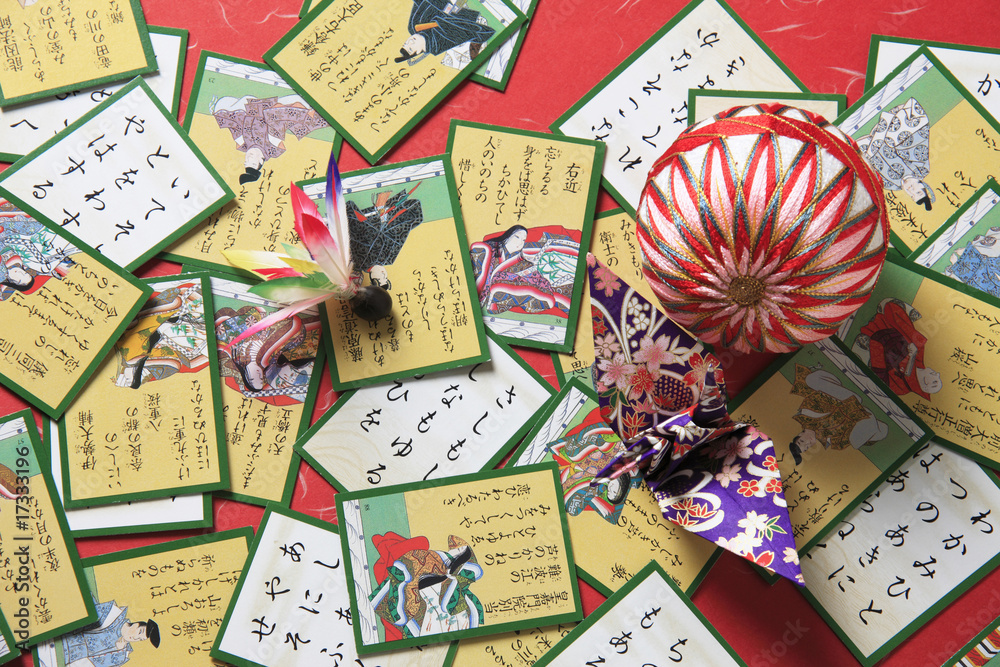
During this era, the color and design of kimonos varied based on social status. Colorful kimonos often served as a status symbol for the aristocracy. The “Juunihitoe,” depicted in the traditional Japanese card game “Hyakunin Isshu,” featured layered, colorful kimonos and was worn by noblewomen. It is said that aristocratic women would flaunt their sense of color coordination and intelligence by revealing the hems of their Juunihitoe without showing their faces.
The Edo period (1603–1867) marked the zenith of kimono culture. Initially exclusive to the aristocracy and samurai, kimonos gradually became more accessible to people outside the upper class. However, due to social restrictions, materials and colors were limited, leading commoners to express their fashion sense through kimono patterns and obi (sashes).
In the Meiji era (1868–1912), Japan underwent Westernization, and official occasions required Western attire. Despite this influence, kimono remained prevalent in everyday life, and it wasn’t until the post-war period that Western clothing became the norm for daily wear. Kimonos then became reserved for special occasions.
着物の種類と意味(Types and Meaning of Kimono)
Design & Meaning
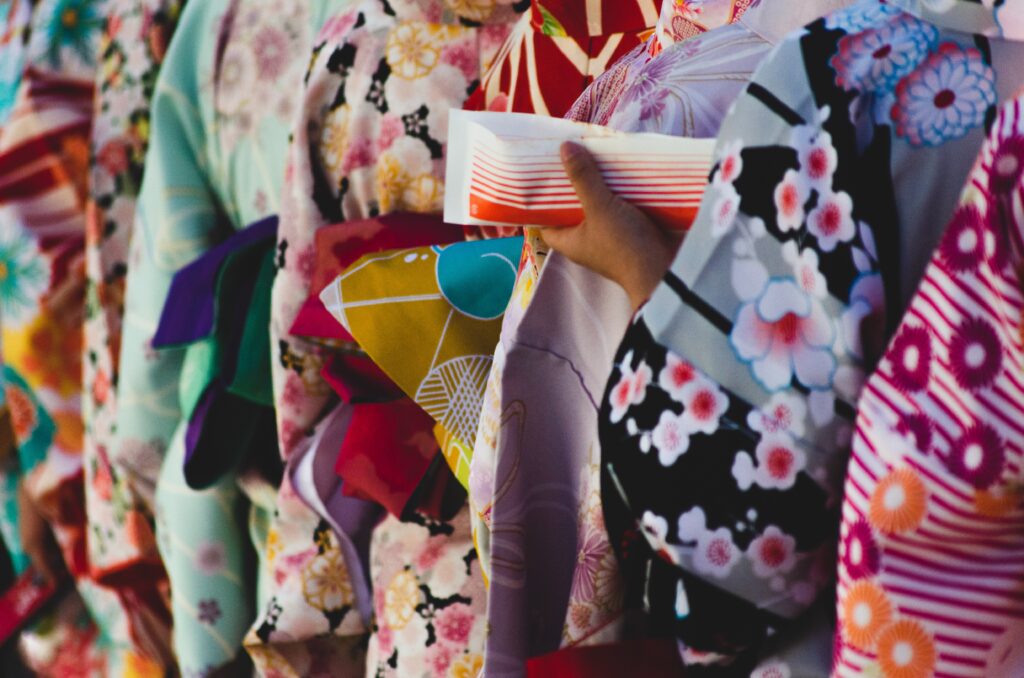
Designs on kimonos often carry symbolic meanings. For instance, cranes symbolize longevity and marital harmony, making them common in wedding kimonos. Patterns like “Matsu Take Ume” (pine, bamboo, plum) signify endurance and vitality, making them suitable for celebrations like weddings and Shichi-Go-San (a traditional rite of passage for children).
Kimono for each situation
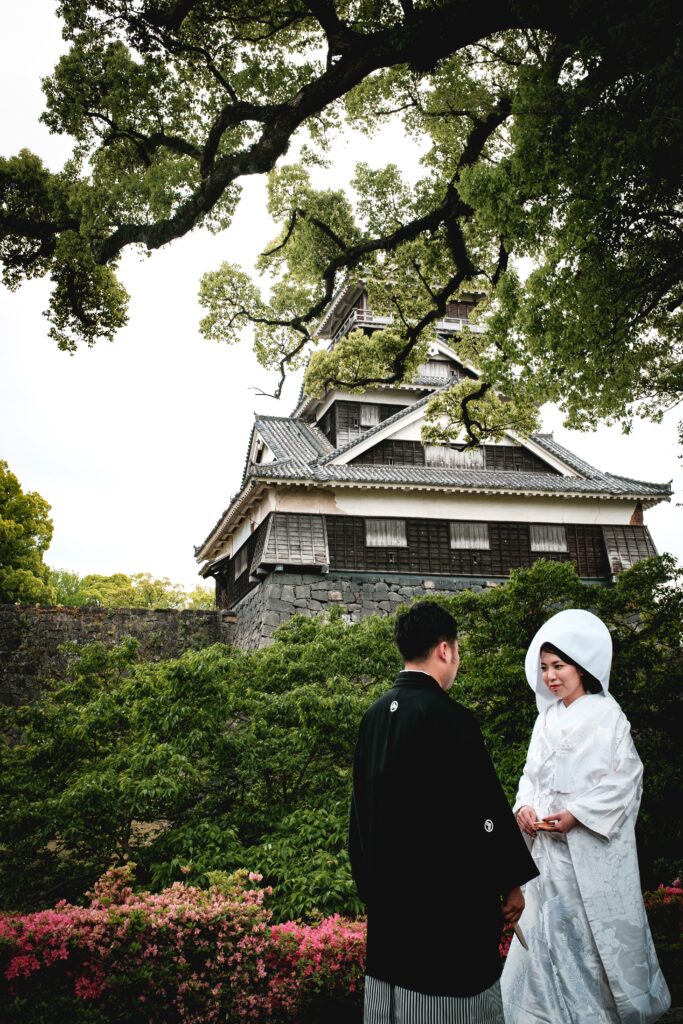
Kimono types vary according to occasions. The “Uchikake” is a formal outer kimono worn by brides, while the “Shiromuku” is an all-white kimono exclusively for weddings. “Furisode” is a long-sleeved kimono worn by young women for the Coming-of-Age ceremony. The “Yukata” is a casual, lightweight kimono often worn during summer festivals.
まとめ(Conclusion)
Lastly, Kyoto’s Nishijin district is renowned for traditional weaving. Historically a thriving textile hub, Nishijin continues to produce delicate and beautiful textiles known as Nishijin-ori. Despite the decline in the textile industry, the area has transformed into a charming destination with cafes and accommodations, preserving its historical appeal.
Armed with this knowledge, exploring the world of kimonos becomes not just a visual treat but also a journey through Japan’s rich cultural tapestry.


コメント